

How Sexism and Bias Affect Women Entrepreneurs : Understanding Devaluation and Protecting Your Vitality !
How Sexism and Bias Affect Women Entrepreneurs
Understanding the Mechanisms of Devaluation and Protecting Your Vitality.
Where Do Prejudices Come From? Education, Environment and Perceptions of Eastern European Women.
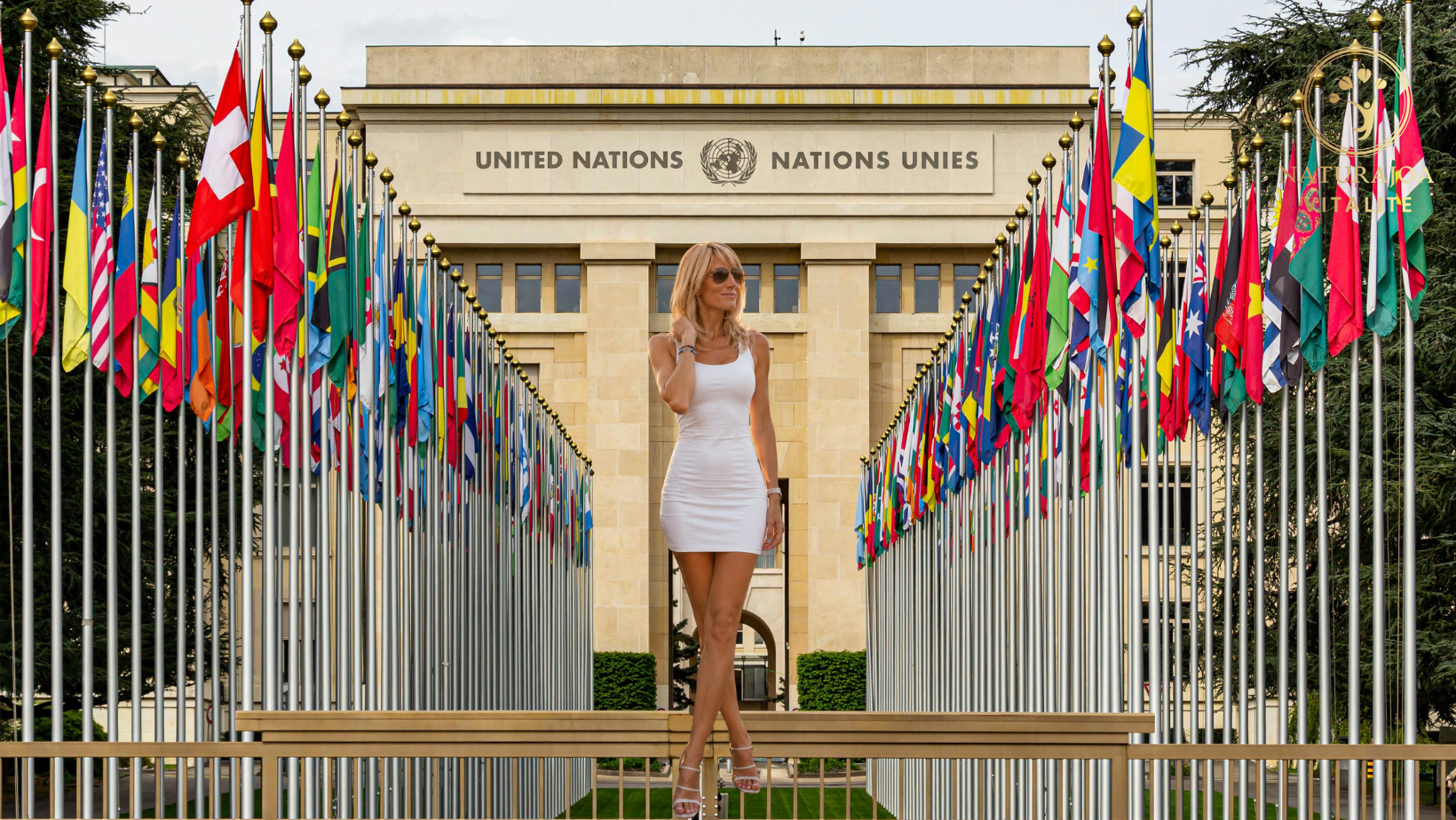
Sexism does not always come from conscious hatred.
It can develop through education, become reinforced by the social environment, and be passed down through habits that no one takes the time to question.
To understand why some women entrepreneurs are devalued, intimidated or unfairly judged, we need to look beyond visible behaviors.
It is necessary to examine the mechanisms that shape beliefs, power relationships and perceptions of female success.
Why do some men feel entitled to speak to women with contempt?
Why can an ambitious female entrepreneur be perceived as a threat?
Why can geographical origin, accent or a woman’s cultural background influence the way her abilities are perceived?
There is no single explanation. These issues may be connected to a combination of factors: education, family models, cultural norms, professional environments, stereotypes, personal experiences and a lack of self-reflection.
Understanding these origins does not mean excusing such behaviors.
It helps us better identify the mechanisms that maintain them and consider sustainable solutions.
1. Education: The First Representations of Women’s and Men’s Roles.
Education is one of the first environments in which we learn what society expects from us.

From childhood, some children may be exposed to explicit or implicit messages about female and male roles:
- Boys should be strong, take the lead and avoid showing their emotions.
- Girls should be kind, accommodating and avoid conflict.
- Men are supposedly naturally destined to make decisions.
- Women should prioritize family over professional ambition.
- Male authority is supposedly more legitimate than female authority.
Not all families pass on these representations, and individuals do not automatically reproduce everything they have learned.
However, when these beliefs are repeated without being questioned, they can influence behavior in adulthood.
A boy who grows up seeing women being interrupted, ignored or systematically placed in a secondary position may eventually consider this behavior normal.
Conversely, an education that encourages mutual respect, autonomy, listening and equality can help develop more balanced relationships.
An Essential Question !

Do we truly teach children to respect people, or do we sometimes teach them to respect certain people more because of their gender, origin or social status?
Education is not limited to words.
It is also shaped by the behaviors we observe every day.
2. The Family Environment and Models of Power.
The family is an important environment for socialization. Children observe how adults communicate, make decisions and manage disagreements.
In an environment where authority is exclusively associated with men, a girl may learn that her opinions carry less weight. A boy, on the other hand, may internalize the idea that he must dominate in order to be respected.
These models do not permanently determine a person’s personality. School experiences, encounters, education and individual reflection can challenge them.
However, family habits can contribute to normalizing:
- Interrupting women when they speak.
- Unequal distribution of responsibilities.
- Minimizing women’s emotions.
- The belief that men should have the final say.
- The association between masculinity and domination.
- The belief that an ambitious woman is moving away from her “traditional” role.
When a woman becomes an entrepreneur, she may therefore face contradictory expectations.
She is expected to be competent and independent, yet she may be criticized for being too assertive when she actually exercises authority.
A society cannot encourage women’s autonomy while socially punishing them when they exercise it.
3. Prejudices Are Also Shaped by the Social Environment.

Prejudices are not transmitted exclusively through the family.
They can be reinforced by one’s surroundings, the media, social groups, local traditions and certain professional environments.
When an individual mainly lives in an environment where people share similar origins, habits or life experiences, they may have fewer opportunities to question their existing perceptions.
This does not mean that a village, region or social group is automatically closed-minded or sexist.
Local environments are diverse, and the people who live in them have different attitudes.
Nevertheless, certain mechanisms may emerge when difference is perceived as a threat:
Distrust towards someone who does not fit the group’s usual patterns:
- Difficulty recognizing competence expressed in a different way.
- A negative interpretation of an accent or communication style.
- Pressure to conform to local norms.
- Confusing familiarity with credibility.
A person may be considered more trustworthy simply because they resemble members of the group, rather than because their abilities have been evaluated objectively.
This is precisely why professional trust must be built on facts, not familiarity or stereotypes.
In my entrepreneurial journey, I faced a particularly challenging situation: the feeling that certain banking representatives had not carried out all the necessary checks before making a decision about my project.
What affected me most deeply was not only the response to my financing request.
It was, above all, the impression that my application, my work and my vision had not been examined with the attention and seriousness I believed they deserved.
When a woman entrepreneur invests time, energy and resources into building her professional future, she does not necessarily expect a guaranteed positive answer.
Above all, she expects a serious assessment, clear explanations and respectful treatment.
A refusal can be accepted when it is based on transparent and verifiable criteria. However, when the reasons are insufficiently explained or the checks appear incomplete, another question arises:
Was my project genuinely assessed, or was a decision made too quickly without giving it the consideration it deserved?
1. A Refusal Is Not Necessarily an Injustice, but a Lack of Explanation Deserves to Be Questioned.
In the professional world, a bank has the right to assess risks, request guarantees and refuse financing. An entrepreneur must be able to accept a decision that does not meet her expectations.
However, a healthy professional relationship cannot be based solely on the final decision. It also requires a process that can be understood:
- Which elements of the application were examined?
- What checks were carried out?
- Which criteria led to the decision?
- Was additional information requested?
- Were any inconsistencies identified and communicated?
- Was the decision communicated clearly and respectfully?
These questions are not an attack.
They represent a legitimate request for transparency and professional accountability.
When someone claims that a project is fraudulent, incorrect or insufficient, it is essential that they explain the concrete evidence supporting their assessment. A statement should not replace verification.
2. The Danger of Judgments Made Without a Clearly Established Foundation.
In my experience, what concerned me was the gap between the seriousness of certain assessments and the lack of clarity regarding the checks that had been carried out.
When a professional questions the work of a woman entrepreneur, their statements can have significant consequences:
- Her credibility with other institutions.
- Her ability to obtain financing.
- The level of trust she places in her professional partners.
- Her psychological energy.
- The time she must spend defending herself instead of developing her business.
The more serious an accusation is, the more it should be supported by specific facts, documents and an identifiable method of analysis.
This does not mean that an entrepreneur should automatically interpret every unfavorable decision as discrimination. It is important to distinguish between three situations:
- A professional decision based on objective criteria.
- An analytical error or insufficient verification.
- Potentially discriminatory or disrespectful treatment, which requires concrete evidence to be established.
This distinction is essential. It allows people to defend their rights without automatically turning disappointment into an accusation, and to request accountability without abandoning rigor.
3. When a Woman Entrepreneur Has to Prove Her Worth Twice.
For some women, particularly those perceived through their origin, accent, international background or cultural differences, the search for recognition can become more complex.
They may feel that they must demonstrate not only the viability of their project, but also their professionalism, business intelligence and legitimacy as entrepreneurs.
This experience should not be generalized to every institution, every man or every region. However, it deserves to be examined when a person observes repeated behaviors involving condescension, distrust or a lack of listening.
A woman entrepreneur should not have to constantly fight for the basic right to be treated as a professional counterpart.
Her origin is not evidence of incompetence. Her gender is not a measure of her credibility. And her ambition should not be interpreted as a threat.
The only relevant questions should be: What are the facts, the skills, the strength of the project and the applicable professional criteria?
4. A Lack of Institutional Seriousness Can Drain Human Vitality.
At Naturajoa, vitality is not limited to nutrition, movement or physical health. It also concerns our ability to develop within environments that respect our dignity.
When a person must devote considerable energy to obtaining a response, correcting a misunderstanding or requesting explanations that should have been provided from the beginning, that energy is no longer available for creating, innovating and contributing.
This situation may lead to:
- Frustration.
- A feeling of powerlessness.
- A loss of trust in certain institutions.
- Mental overload.
- A decrease in entrepreneurial motivation.
However, the emotional impact of an experience should not be confused with a medical diagnosis. Everyone reacts differently, and a difficult situation does not automatically produce the same consequences for every person.
One reality remains: professional environments based on respect and clarity make it easier to preserve the energy needed for creativity, development and personal fulfillment.
5. The Real Question: Who Takes Responsibility for Their Decisions?
An institution cannot be held responsible for every difficulty encountered by an entrepreneur. However, every professional should be accountable for the quality of their work.
Accountability does not mean guaranteeing a favorable outcome. It includes the ability to:
- Carefully examine the available information.
- Recognize the limits of one’s analysis.
- Avoid premature conclusions.
- Explain decisions within the limits of applicable rules.
- Correct an error when it is identified.
- Treat every person with respect, even in cases of disagreement.
When a professional does not have enough information, they should be able to say: “I need to carry out additional checks,” rather than presenting a definitive conclusion without explaining its factual basis.
Competence is not measured only by the ability to make a decision. It is also measured by the ability to explain, listen, verify and acknowledge possible mistakes.
6. Transforming a Difficult Experience into a Life Lesson.
This experience reminded me of an important lesson: we cannot always control how others assess us, but we can choose how we protect our dignity and our energy.
When faced with an unsatisfactory professional situation, several actions can help us regain control.
Document the Facts
Keep emails, dates, requests and responses. Separate observable facts from personal impressions and interpretations.
Request Specific Explanations
Ask clear and professional questions, particularly regarding the information that was verified and the reasons for the decision, whenever those details can be communicated.
Prioritize Written Communication
Written communication makes it possible to keep a record of requests and reduce misunderstandings.
Do Not Confuse Rejection with Personal Devaluation
A banking decision does not define a woman entrepreneur’s human value, future potential or the significance of her vision.
Choose Partners Who Align with Your Values
Cooperation is built on trust, transparency and mutual respect. When a professional relationship no longer provides these conditions, it may be necessary to reconsider the partnership.
7. Global Vitality Requires Institutions That Know How to Listen.
A society cannot speak about innovation, entrepreneurship and progress while neglecting the human conditions in which projects develop.
Behind every application, there is a person:
- A person who has worked hard.
- A person who has taken risks.
- A person who has invested time and, sometimes, personal savings.
- A person who wants to contribute to the economy and society.
- A person who deserves a professional response, even when that response is negative.
Global Vitality therefore requires us to rethink our institutional relationships.
Banks, administrations, businesses and other organizations all have a role to play in creating an environment where people can present their projects without being reduced to their origin, gender, accent or appearance.
Taking someone seriously does not mean automatically accepting their request. It means giving them honest attention, applying consistent criteria and communicating with dignity.
Conclusion — I Am Not Asking for Privileges. I Am Asking for a Fair Assessment.

My experience with certain banking representatives led me to reflect deeply on the place given to women entrepreneurs who are trying to build their future.
I do not claim to know every intention of the people involved.
Only verifiable facts can establish precisely what was done, what was not done and why certain decisions were made.
But I can affirm one thing: anyone presenting a professional project deserves to have their work examined seriously and to receive decisions that are explained with respect and rigor.
I am not asking anyone to promise me success.
I am asking that haste not be confused with analysis, judgment with evidence, or authority with domination.
My origin should not be an obstacle to my potential. My identity as a woman should not diminish the value of my work. And my ambition should never force me to abandon my dignity.
True success is not only about obtaining financing or convincing an institution. It is also about remaining faithful to your values when certain experiences encourage you to doubt yourself.
The Naturajoa Philosophy 🌿✨
“Our vitality grows when we stop judging without verifying, when we choose listening over contempt, and when every human being is given the opportunity to be assessed with fairness, respect and dignity.”
My origin should never be an obstacle to my potential. My identity as a woman should never diminish the value of my work. And my ambition should never force me to abandon my dignity.
True success is not only about obtaining funding or convincing an institution. It is also about remaining faithful to your values when certain experiences invite you to doubt yourself.
The Naturajoa Philosophy 🌿✨
“Our vitality grows when we stop judging without verifying, when we choose listening over contempt, and when every human being is given the opportunity to be assessed with fairness, respect, and dignity.”
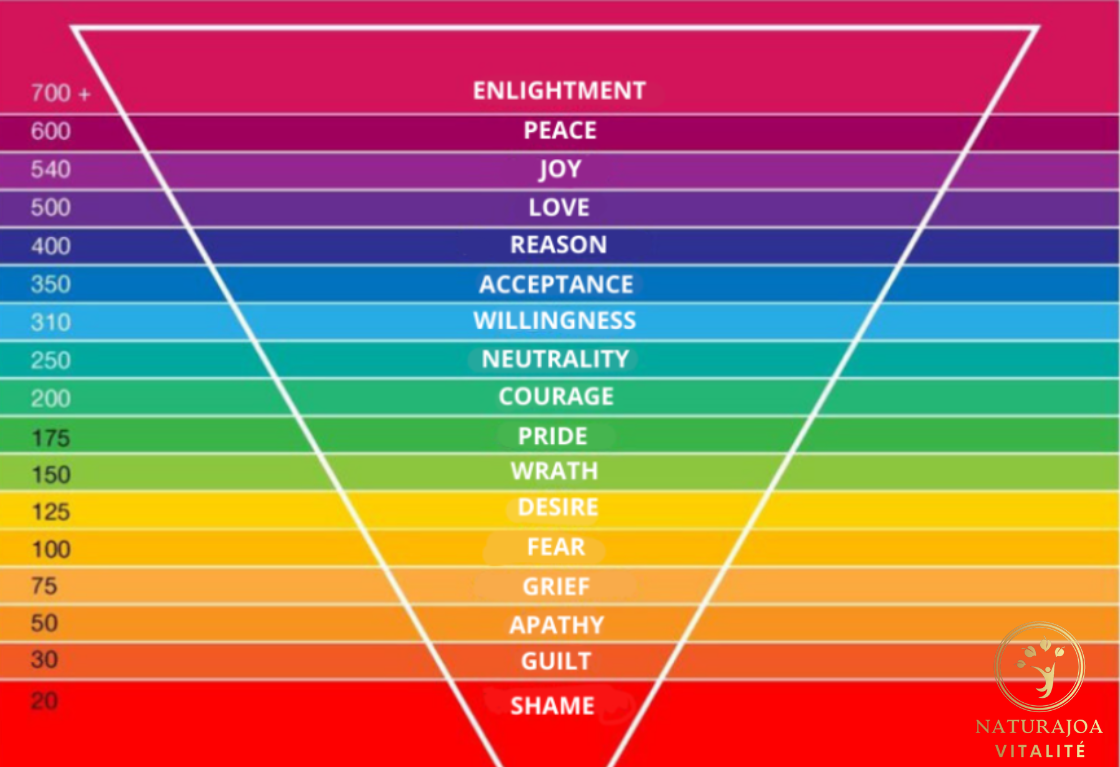
Did you enjoy “The Invisible Walls of Judgment: I Am Not My Origin. I Am a Vision, a Strength, and a Life Potential”?
Here are 8 other articles you may enjoy:
-
-
- World Peace: The Result of Our Inner Vitality.
- Hateful Speech: When Your Vital Energy Is Crying Out from Hunger.
- From Utopia to Vitality: Comfort Weakens Us, While Challenge Regenerates Us. Daily Hormesis: When Discomfort Becomes Our Superpower.
- The Hawkins Scale of Consciousness: An Essential Key to Lasting Peace.
- The Power of Holistic Cleansing: Vibrating in Harmony with Natural Laws. Natural Cleansing as a Key to Long-Term Success.
- Global Vitality Through Dynamic Economic Cooperation.
- Cultivating Spiritual Strength for Global and Sustainable Vitality. Peace as a Vital Path.
- Two Forces, One Humanity: Understanding the Shadow in Order to Choose the Light.
-

This was: “The Invisible Walls of Judgment: I Am Not My Origin. I Am a Vision, a Strength, and a Life Potential.”

P.S. If you enjoyed this article, “The Invisible Walls of Judgment: I Am Not My Origin. I Am a Vision, a Strength, and a Life Potential,” click on Follow the Page and share it. I would be delighted. 🙂

Click on “Follow the Page” so we can connect on Facebook 🙂


Discover Power eBooks ✨
If these words awakened something within you, I gently invite you to go a little further.
My eBooks guide you towards stronger, brighter, and more grounded energy,
in harmony with all living beings and the Earth.
Joanna Anna Romanowska – naturajoa.com
Global Vitality · Respect for All Living Beings · Joy of Living




🐉✨ Discover My Power eBooks
With my animals by my side, I invite you to discover my power eBooks.
Each page was written to activate your inner energy, elevate your awareness, and help you transform your life
with gentleness, clarity, and joy.
🌍 Welcome to the Naturajoa universe: vitality, love, and transformation.
Joanna Anna Romanowska • naturajoa.com










The information shared on this website is provided for informational purposes only and is based on my personal experience and research in natural health.
It does not constitute medical advice under any circumstances.
For any health-related concern, please consult a qualified healthcare professional.
My intention is to share, inspire, and contribute to a Global Dialogue on Vitality and Well-Being.
Disclaimer
The content, advice, programs, and guidance offered by
Naturajoa Vitality — Joanna Anna Romanowska are intended to inform,
inspire, and support a holistic approach to well-being and vitality.
They do not constitute medical diagnosis, medical treatment,
or personalized medical advice under any circumstances, and they do not replace consultation with a doctor
or another qualified healthcare professional.
Each person remains fully responsible for their choices and decisions,
for how they apply the advice provided, and for their physical,
emotional, and psychological responses.
The guidance provided aims to offer tools, perspectives, and knowledge,
but cannot guarantee any specific result, as outcomes depend on numerous individual factors
such as health status, lifestyle, environment, personal commitment, and other circumstances.
By participating in programs, reading materials, challenges, guidance sessions, or by applying
the advice shared, the client acknowledges that they are acting consciously and under their own responsibility.
Naturajoa Vitality and Joanna Anna Romanowska cannot be held responsible
for any adverse effect, damage, injury, loss, or direct or indirect consequence
resulting from the use of the information or advice provided.
You are advised to seek guidance from your doctor or a qualified healthcare professional
before making any significant changes to your diet, physical activity, or lifestyle habits,
particularly in cases of pregnancy, illness, ongoing medical treatment, or a specific medical condition.




You May Also Like

💪 Les Hormones de Croissance : Architectes de la Croissance et de la Régénération

🌿 L’Équilibre de la Vie : Pourquoi la Nature est Notre Meilleur Guide ?!